
Consider a replacement carefully · Toronto & GTA
Keep the useful parts. Change the arrival problems.
A buzzer system replacement should solve a known entrance problem. Identify missed visitors, equipment faults and administration work separately before comparing the current panel with phone credentials and QR calls.
In short
Does replacing a buzzer mean replacing every entrance component?
Investigate the current problem before removing equipment
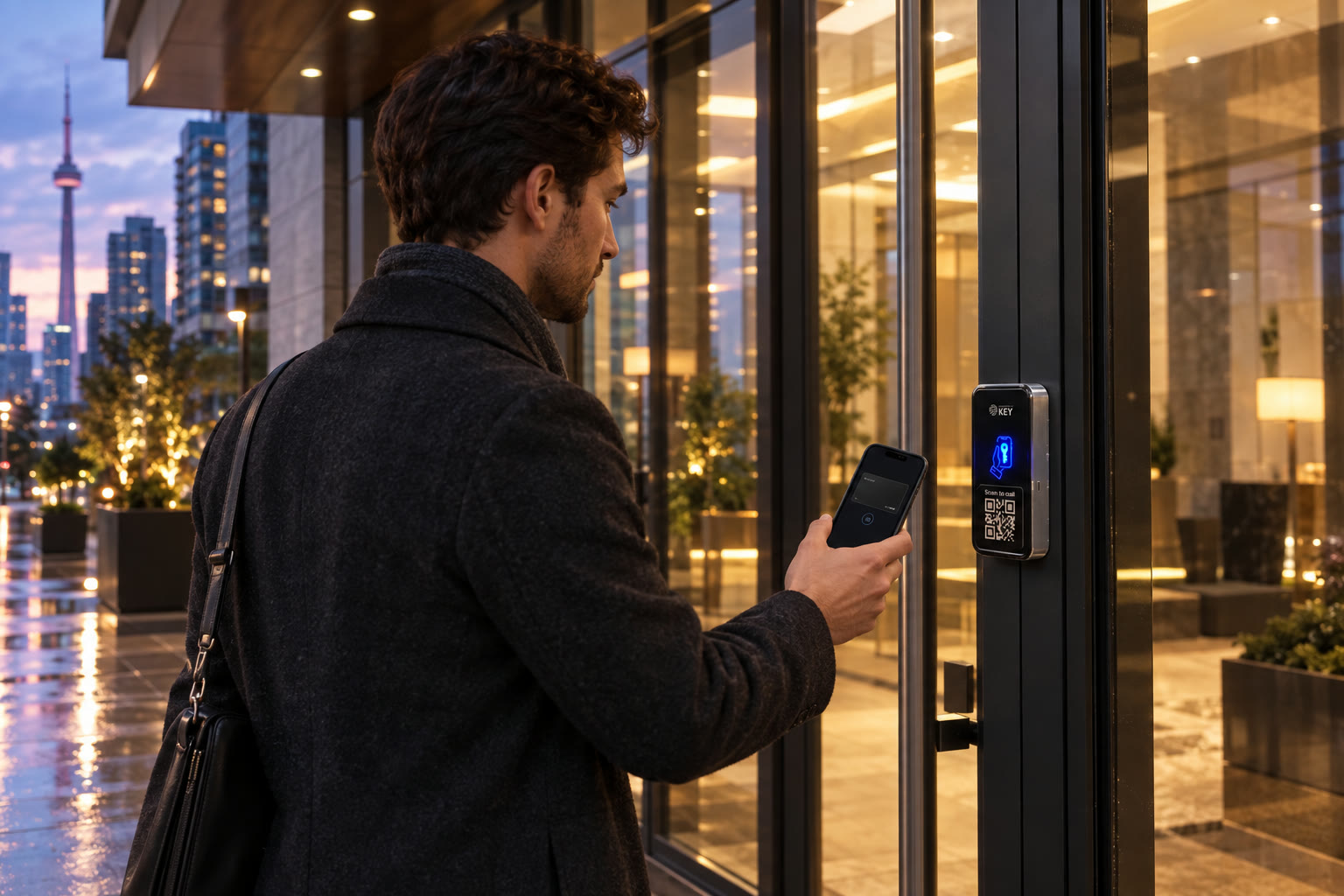
Not necessarily, and it should not be assumed. A panel, indoor answering equipment, release wiring and lock may be separate parts of the entrance. SmartphoneKey offers a different documented visitor route through QR calling and managed keys. Establish which existing parts can remain and which require replacement during the physical assessment.
Describe what happens at the existing entrance
Which part of the current buzzer arrangement is causing difficulty?
An inventory of what works and what fails helps separate a calling change from necessary work on the door itself.
Describe the replacement decision
Identify panel faults, recipient changes and retained equipment.
Review arrival continuity
Assess the proposed calling route and installation interruption.
Agree operator responsibilities
Include resident updates, recipient setup and package charges.
Example, not a completed project
The visitor reaches a resident, but the door still fails to release.
Imagine a building reporting that a visitor can reach the intended person while the entrance sometimes remains closed after the usual release instruction. That description helps distinguish a communication step from the physical release problem, but it does not identify the faulty component. Give the responsible professional the observed sequence and ask which investigation belongs in the assessed scope. A proposal for a different calling interaction should state how the existing condition is handled. This is a hypothetical problem brief, not a diagnosis, a wiring instruction or evidence that replacing the panel will repair the release.
Record the problem before comparing replacements
Separate today's observations from tomorrow's proposed arrangement.
The comparison should make clear what the change is meant to solve and what still needs assessment. This helps the property avoid treating every entrance difficulty as the same equipment purchase.
Describe the current arrangement
- Record whether the difficulty occurs when finding a recipient, making contact, requesting release or closing the door afterward. Explain the observed sequence in ordinary words. An accurate account is useful to the assessor without claiming that management has identified a failed electrical component.
- List the panel, indoor answering equipment, current release and separate resident credentials as distinct parts. Include which functions still work and whether one entrance differs from another. A replacement discussion should not erase useful existing equipment from the inventory simply because the caller used the word buzzer.
- Identify the responsible owner of the common equipment and any service contact already involved. Arrange permission to inspect the opening and relevant spaces. A resident report can introduce the problem, while decisions about shared hardware still belong with the authorized property party.
Describe the proposed transition
- Ask what the documented QR calling route changes for a visitor and recipient. Have the proposal identify retained and replaced equipment rather than implying every familiar handset operation continues. Review how people learn the new interaction and where assistance is available when someone cannot follow it.
- Discuss how regular occupants will enter during the agreed work and when an old route would be removed. Coordinate those decisions after the physical and operating scope is understood. This page cannot establish that a building can disconnect a working entry method before its replacement has been accepted.
- Compare the whole proposed result with the reported problem. Include door and release work, supply, connection, instructions, administration and continuing charges. Keep an unresolved fault or unconfirmed reuse item separate so a new calling demonstration is not mistaken for proof that every earlier symptom has disappeared.
Prepare the comparison
Name the failure you want to stop.
A replacement decision is easier to evaluate when the original problem is specific. Separate a broken component from a workflow nobody owns.
01List the existing equipment
Record the entrance panel, answering arrangements, powered release and any separate fobs. Include which parts still work reliably. This inventory gives the assessor a starting point; it does not establish that undocumented wiring can be reused.
02Describe the difficult arrivals
Note whether visitors cannot reach residents, occupants struggle to manage entry or the door itself does not release properly. A new calling method may address one part of that experience while a mechanical or electrical fault requires separate work.
03Compare the complete change
Ask what a resident, visitor and administrator would do before and after the proposed replacement. Include people without the expected phone, access during the installation and the process for changing occupancy. Compare that practical scope alongside equipment and continuing costs.
SmartphoneKey documents QR visitor calling and managed credentials. The replacement checklist here helps define the problem and work boundaries; it does not diagnose an existing buzzer, establish a repair service for an unidentified panel or verify reuse of concealed wiring.


Separate the symptom from the proposed purchase
Show what works today and what needs investigation.
Describe an ordinary arrival and the particular step that fails or creates difficulty. Identify the present panel, answering arrangements, release and any separate credential system. The responsible assessor can then distinguish the proposed calling change from investigation of an existing mechanical or electrical condition. Ask which equipment may remain and which questions are still open. Buying a new reader does not establish a diagnosis for the old system or confirm that its wiring, handsets and release can all be reused.
Is it the right fit?
Is the replacement objective clear enough to assess?
The property can describe the problem and approve review
- You can identify the limitations of the current buzzer arrangement.
- The building can assess retained hardware before replacement.
- Residents can evaluate a different visitor calling experience.
Diagnosis or retained-equipment requirements remain open
- You require a promised repair for an unidentified panel fault.
- You assume old handset functions transfer automatically to QR calling.
Before disconnecting a familiar arrival route
Compare the change people would actually experience.
A useful replacement brief identifies the present difficulty, the equipment boundaries and the transition for occupants. Keep unresolved fault investigation visible in the proposal.
Can you diagnose a buzzing noise from this page?
No. A search for buzzer systems can also describe a fault in existing equipment. Describe the panel and symptom to the responsible service professional. A replacement overview cannot diagnose an electrical problem remotely.
Will QR calling feel the same as pressing an apartment button?
It is a different visitor interaction. The visitor uses a phone camera at the reader. Review the instructions and recipient arrangements with the building instead of assuming the experience is identical to its current panel.
Should the old system be disconnected immediately?
That is a transition decision for the assessed project. Establish how authorized people will enter during work and how residents will learn the new method before removing a working entrance route.
Does a new reader fix a door that will not latch?
Not by itself. The reader handles a credential and sends a release signal to suitable hardware. Door alignment, closing and latch faults should be identified separately in the survey.
How should approval be arranged?
Involve the party responsible for the shared entrance. A unit occupant should not authorize changes to common equipment alone. Ask for an agreed scope before decisions about replacing the panel, power or lock.
Does reaching a resident prove the door-release equipment is working?
It demonstrates a communication step in that interaction. The release and the physical door still need their own assessment. Describe what happened after contact was made and ask the responsible professional to investigate the actual arrangement. This page does not identify a failed component or establish that replacing a calling panel corrects every entrance fault.
Should we remove working indoor equipment from the comparison?
Include it in the inventory and explain which functions the property wants to keep. A different visitor interface does not establish compatibility with all old answering equipment. Ask the assessed proposal to identify what remains, what changes and any required function that has not been confirmed before agreeing to disconnect a familiar route.
How can management prepare a useful symptom description?
Describe where the visitor stands, what action they take, whether a recipient responds and what the door does next. Note which opening is involved and whether the behaviour is intermittent. Keep personal visitor and resident details out of this preview. These observations support a professional assessment without turning an online enquiry into a remote repair diagnosis.
Next step
Describe the problem before the replacement.
An inventory of what works and what fails helps separate a calling change from necessary work on the door itself.
Request a door checkRequest a replacement scope tied to the reported problem
Identify the existing equipment, proposed visitor interaction and hardware retained or replaced. Show any separate fault investigation, release work, supply and connectivity requirements alongside user instructions and ongoing costs. Record unconfirmed handset or wiring reuse explicitly so the reason for replacement remains understandable.
For the Toronto/GTA assessment discussion, involve the authorized premises contact and someone who can explain the actual arrival difficulty. Arrange access to the affected opening after the scope is discussed. This demonstration enquiry neither schedules a repair nor authorizes disconnection of common equipment.