
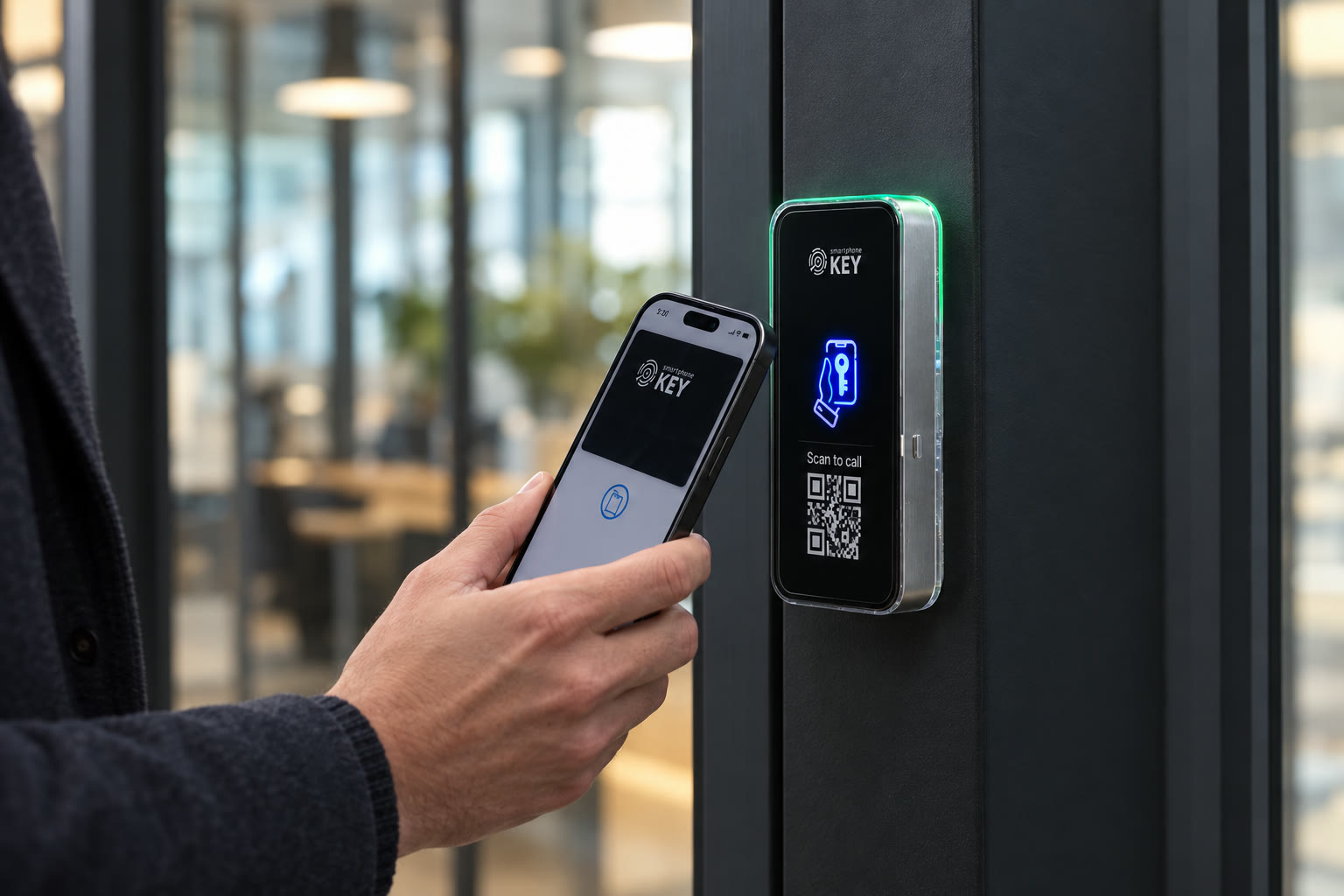
Choose a credential that fits · Toronto & GTA
Less key handling. Clearer entry rules.
Keyless entry changes how permission reaches the door. Work out who will use a phone, who needs a card and how temporary visitors should enter before choosing a system for your Toronto or GTA property.
In short
Is keyless entry the same as a keypad lock?
Compare the credential, not just the lock’s appearance
Keyless entry is a broad description: the person entering does not use a conventional metal key for that interaction. It does not identify one particular technology. SmartphoneKey documents Wallet credentials and NFC cards presented to a reader, plus managed guest access. Do not assume it includes a numeric keypad, fingerprint recognition or compatibility with another manufacturer’s credentials merely because those products appear in smart-lock searches.
Choose the everyday entry method
Who needs a phone key, a card or a visitor route?
Start with regular users and occasional visitors. The physical door assessment comes before a commitment to equipment or installation.
Describe credential administration
Explain issue, replacement and withdrawal of current keys.
Assess the proposed alternative
Check supported credentials against the entrance equipment.
Confirm the transition plan
Agree responsible users, retained keys and ongoing charges.
Example, not a completed project
A regular card user and a one-time visitor arrive differently.
Imagine a property where one regular user prefers a supported NFC card while a contractor is expected for a particular appointment. The regular card needs an agreed issue and replacement process. The contractor needs permission tied to the authorized visit or another clearly explained arrival arrangement. Giving both people the same permanent credential would avoid the initial distinction while making later withdrawal harder to manage. Discuss how each receives instructions and whom each contacts if the intended method is unavailable. This is a comparison exercise, not a record of customer access, an automatic booking integration or a promise that either credential handles every outage.
Credential convenience includes its whole lifecycle
Plan first use, an exception and the end of permission.
A useful keyless-entry comparison considers more than presenting a phone once. Work through how people receive access, obtain assistance and stop holding permission when its purpose ends.
Prepare the first use
- Explain which documented credential methods the assessed package will provide. Keep a phone option and the supported card option distinct from generic smart-lock features found in search results. Name a required keypad or biometric function explicitly if the purchase depends on it; do not assume it is included.
- Provide directions to the intended reader and show the actual presentation method at handover. In a building with several entrances, the credential may be valid at a particular opening rather than every visible panel. Instructions should tell the user where to go and whom to contact without exposing another person's private access details.
- Decide how a planned visitor receives the agreed permission and learns its limits. Establish who approves a changed appointment. A documented guest window or use count supports an instruction from the property; it does not establish that a calendar update automatically changes the key.
Prepare the moments when the routine changes
- Discuss a missing phone, lost card and user unable to follow the intended method. These are assistance questions, not reasons to publish a permanent shared key. Ask how the affected permission is reviewed and what actual fallback is agreed for the entrance being installed.
- Choose who withdraws access after a departure or completed visit. Make the instruction independent of whether an old physical card is recovered. The property needs an administration process as well as the reader's ability to recognize credentials; neither should be assumed from the word keyless.
- Compare the complete installed arrangement with the current key-handling work. Include conversion, cabling, supply, connectivity, chosen credentials and continuing costs. Explain which old mechanisms or separate systems remain, so an easier credential does not hide an unresolved dependency elsewhere on the route.
Plan the routine
Separate regular access from short visits.
A household, shared workplace and managed building have different access habits. Choosing a credential starts with those habits and the support people will need.
People who arrive every day
For regular users, consider a supported phone credential or a product-specific NFC card. Show each person how their chosen method is presented at the reader. Include people who prefer not to use a personal phone; a digital entrance should have an agreed credential plan for them too.
People with a limited reason to enter
A visitor’s permission should match the visit. Define its start, end and any allowed uses before issuing it. Cleaning, maintenance and a one-off appointment may need separate windows, even if the same manager arranges them. Keep the process for changing or cancelling a visit explicit.
People whose access ends
Decide what triggers removal: a departure, a lost card or a changed room assignment. SmartphoneKey’s portal supports revoking access. That capability still needs a named person to use it; a reader does not learn about a membership cancellation or tenancy change by itself.
People needing help at the entrance
Write instructions that explain the reader and the expected credential, rather than assuming everyone knows the system. Visitors without an issued key may use the documented QR calling path. Review what happens when the intended recipient cannot answer instead of treating every visitor as an automatic admission.
The supplied SmartphoneKey guides describe Wallet keys, NFC cards and limited guest credentials. The changeover examples below are questions for the property to settle; they do not establish keypad entry, fingerprint recognition or compatibility with another card issuer.


Watch an ordinary arrival
Match the credential choice to a usable entrance.
Explain how people currently find the door, obtain a key and ask for help. Include someone who will use a product-specific NFC card rather than assuming everyone chooses a phone. The physical review still needs to establish the lock arrangement, reader position, supply and connection. Ask how the proposed method will be explained at handover and how a user with an unavailable credential should seek assistance. Removing the need to lend a metal key does not remove the need to plan actual hardware or everyday support.
Is it the right fit?
Will people understand their route and their credential?
The changeover can be explained
- You want to stop lending the same metal key to unrelated visitors.
- You can define a permission window and remove access when its purpose ends.
- The property can be assessed for suitable powered lock hardware and a reader.
Confirm the missing method first
- You require an entirely unwired installation on an unassessed mechanical door.
- You need a keypad or biometric feature that has not been established for this product.
Before handing out the first digital key
Make the new arrival routine understandable.
Compare regular users, short visits and people needing assistance. Each should have an agreed route to enter or reach help, without turning every exception into a permanent shared permission.
Will existing keys have to disappear on the first day?
That is a hardware and operating decision for the particular entrance. Establish what must remain usable during the change and how fallback entry will work. The word keyless does not mean every existing mechanism can be removed without assessment.
Can a temporary credential cover the front entrance and an assigned room?
The documented system can associate access with more than one lock. The administrator should still grant only the doors required for the visit. In a shared building, the person arranging a private-room visit may not have authority over the lobby.
Does everyone have to install an app for a visitor call?
The documented visitor route uses a phone camera to scan the reader’s QR code and place a call without installing an app. Receiving that call and deciding to admit the visitor remain part of the property’s operating plan.
How should we compare keyless entry costs?
Compare the number of connected doors, any lock conversion, power and cable work, connectivity, credentials and package costs. A low device price cannot describe the total cost of converting an unfamiliar entrance. Ask for the complete scope before agreeing to installation.
What should the backup plan cover?
Include a missing credential, a phone without charge, an unavailable network and loss of power. Different failures affect different parts of the arrangement. Have the installer explain the actual fallback for your door rather than relying on a general promise of offline access.
Does keyless mean that every user needs a smartphone?
That conclusion does not follow from the term. SmartphoneKey materials also describe NFC cards. Establish which supported credentials the proposed package includes and how a person chooses or receives one. A physical-card alternative still needs issuing, replacement and withdrawal arrangements. It does not prove that the installed lock remains usable through every power or connection failure.
Can we use one permanent credential for all occasional visitors?
Explain the visits and their approval process before choosing that shortcut. A permanent shared permission makes it harder to end just one visitor's access or interpret which credential interaction occurred. Discuss the documented guest limits and the person maintaining changes. This page does not issue guest access or establish that an appointment platform updates it automatically.
Should old keys be collected before the new method is demonstrated?
Agree the changeover with the party responsible for the actual entrance. Identify any retained mechanism, access needed during work and the demonstration users should receive. This page cannot determine when a particular mechanical key should stop operating. The assessed proposal and handover should explain how entry remains organized while the credential method changes.
Next step
Choose how people will enter.
Start with regular users and occasional visitors. The physical door assessment comes before a commitment to equipment or installation.
Request a door checkCompare the cost of a complete credential change
Ask for the fitted reader and release arrangement, required power and connection work, supported credential choices and first-user instructions. Keep card requirements, package charges and ongoing administration visible. Distinguish the new permission routine from any old key or separate building system that remains in use.
For the proposed Toronto/GTA entrance, identify a contact who can show today's key handover and the inside and outside of the opening. Discuss who should attend the credential walkthrough after the physical scope is known. No conversion date or credential delivery is booked by this preview.