
Visitor communication · Toronto & GTA
A visitor at the door. A person who can answer.
An intercom system needs a clear route from an unfamiliar visitor to the right recipient. Examine how a QR calling approach fits that journey before replacing an existing entrance panel.
In short
How does SmartphoneKey handle a visitor without a key?
Separate the conversation from permanent access
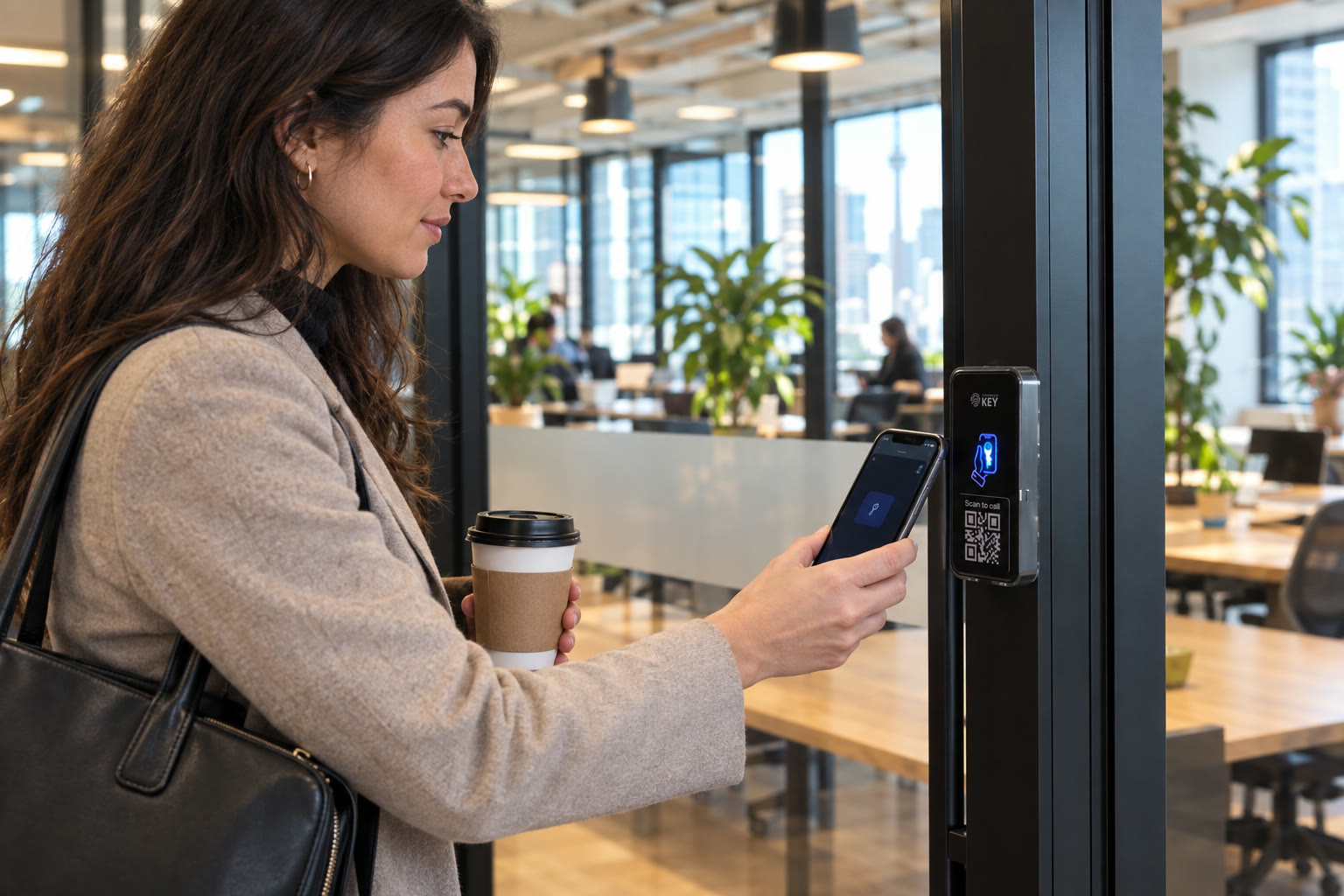
The documented visitor approach uses the QR code on the reader. A visitor scans it with a phone camera to start a call without installing an app. That is different from issuing a regular door credential. The property still needs a recipient who can respond and an agreed process for admitting the expected visitor.
Map the visitor's first contact
Who should answer a person waiting outside?
Describe your usual visitors, intended recipients and current panel. Compare the full arrival process before changing equipment.
Identify intended call recipients
Describe availability and the visitor admission decision.
Check the communication route
Review the reader location and connection dependencies.
Agree guest instructions
Include unanswered calls, operator training and service costs.
Example, not a completed project
A visitor reaches the right door while the host is busy.
Imagine an expected visitor arriving at a workplace where the intended host is in a meeting. Finding the correct reader and placing the documented call would only complete part of the journey. The property still needs to explain whom the visitor should contact or what agreed arrival instructions apply when the host cannot respond. Review that situation with the people responsible for reception before replacing the existing route. This is a planning example, not a customer call history, a promise of automatic call forwarding or permission for a visitor to enter without an authorized decision.
Compare the journey rather than the panel alone
Connect the outside instructions with the inside responsibility.
A different calling interface changes what visitors do. Ask how that change will work at this entrance and who will maintain the instructions after the equipment is installed.
What an arriving visitor needs to understand
- Identify the public door and reader in the directions given before an appointment. Where several businesses share an address, explain the permitted route without directing an unfamiliar visitor through a staff-only area. A successful call from the correct entrance does not resolve directions that led other visitors elsewhere.
- Review the documented camera-and-QR interaction with someone unfamiliar with the property. Include the actual visible instructions and the point at which a responsible recipient responds. Do not assume that a person who has used a traditional apartment button will find the new interaction identical.
- Decide how to help an expected visitor who cannot use the intended phone route. Agree the instructions with the property rather than promising an unverified alternative feature. That assistance arrangement belongs alongside the equipment comparison, not as an unanswered question left for the first arriving guest.
What the receiving organization needs to maintain
- Name who is responsible for answering and how expected absences are handled. Reception hours, appointments and availability are operating facts the property must supply. The existence of a reader or calling function is not evidence of continuous staffing or automatic admission when nobody responds.
- Separate a visitor requesting a conversation from a contractor already authorized for an agreed window. Discuss when a guest credential is appropriate and who approves its limits. Issuing permanent unrestricted access to avoid an occasional unanswered call changes the permission problem rather than explaining the visitor journey.
- Keep the retained panel, release and indoor equipment visible in the assessed proposal. Request a clear explanation of what visitors, regular users and recipients do after the change. Include continuing costs and the person updating instructions when contacts or premises arrangements change.
Follow the arrival
Test the journey from the pavement.
Use the experience of someone who has never visited the property. Familiar staff can miss instructions that a first-time visitor needs.
01Find the right entrance
Check that an arriving person can identify the intended door and the reader. A building with several entrances should give instructions for the actual route. Avoid sending visitors to a private staff opening simply because it is closest to the recipient.
02Reach a responsible recipient
Decide which person receives visitor calls and what happens when they are busy or absent. The existence of a QR code does not create reception coverage. Discuss an alternative arrival arrangement for someone unable to use the expected phone route.
03Choose the appropriate permission
A conversation and a credential solve different problems. A known contractor with an agreed work window may need a guest key, while an unexpected visitor needs a decision from someone responsible. Do not turn every visitor call into a permanent credential.
SmartphoneKey materials describe a visitor scanning the reader QR code with a phone camera to call without an app installation. The reception, directions and unanswered-call arrangements here are operating decisions for the property, not a staffed answering service supplied by this page.


Begin where a first-time visitor stands
Review the approach, the reader and the person answering.
Show the intended public entrance and explain how a visitor currently identifies it. Describe the panel, answering equipment and release arrangement already in use. Ask which parts the assessed proposal retains, changes or leaves separate. Include the recipient's operating hours and an agreed way to assist someone unable to follow the expected phone interaction. Equipment and reception arrangements need to be reviewed together; a QR code on the wall cannot establish that somebody is available to answer.
Is it the right fit?
Can visitors reach a responsible recipient?
Directions and response ownership are defined
- Visitors normally carry a phone and can follow the QR instructions.
- The property has named recipients for visitor calls.
- You want to evaluate calling alongside managed door credentials.
An answering or equipment requirement remains open
- You require an established indoor handset feature that has not been confirmed.
- You expect all visitors to enter without anyone responding or issuing permission.
Before changing the visitor experience
Make the route understandable to an unfamiliar caller.
A useful comparison begins outside the premises and continues until a responsible person responds. Keep a calling request distinct from a standing permission to enter.
Is this the same as a traditional wired intercom?
No. The documented calling route begins with a phone camera and the reader QR code. Compare that experience with the current panel and any indoor equipment before deciding what may be removed.
Does a visitor need the SmartphoneKey app?
The supplied materials describe scanning and calling without installing an app. The visitor still needs a suitable phone for that route. Consider guests who cannot use it when planning entrance instructions.
Will the old panel and reader work together?
That relationship needs assessment. A new visitor route does not establish compatibility with every existing intercom, handset or release circuit. Ask the installer to identify retained and replaced parts explicitly.
Are visitor conversations the same as access logs?
No. A conversation concerns a visitor request; an entry record concerns the recorded access interaction. Do not describe a door activity log as proof of a complete conversation history or a record of every person in the building.
What should happen when nobody answers?
Set that policy with the people using the property. It might involve agreed appointment instructions or another staffed contact arrangement. The product description does not establish round-the-clock reception or automatic admission.
Does a successful visitor call mean permanent access has been issued?
No. A conversation asks a responsible person to respond to an arrival. A continuing credential is a separate permission with its own issuing and withdrawal process. Explain which route a particular visitor should use and who authorizes entry. This preview does not place a call, send a guest key or decide whether a person should be admitted.
What if several businesses use the same street address?
Explain the actual entrance and receiving organization in the arrival instructions. Ask the assessor how the proposed route relates to the shared door and identify who can approve changes there. A tenant's appointment does not establish authority over every common opening. Review the visitor journey with the relevant property contacts before assuming the new interface resolves shared-address confusion.
Can we keep an indoor handset feature as a purchase requirement?
Yes, state the particular function you need so its relationship to the proposed equipment can be assessed. Do not infer that a documented QR calling route preserves every operation of an existing handset or panel. Keep an unanswered requirement visible in the comparison rather than treating the general word intercom as proof that the two arrangements are interchangeable.
Next step
Plan the unanswered call as well.
Describe your usual visitors, intended recipients and current panel. Compare the full arrival process before changing equipment.
Request a door checkRequest a complete visitor-route proposal
Identify the arrival door, proposed calling interaction, responsible recipients and the existing equipment to retain or replace. Include release work, supply and connection requirements, user instructions and continuing charges. Name any indoor-equipment function that remains unconfirmed, along with the operating owner for unanswered arrivals.
For the Toronto/GTA review, arrange a contact who can show both the outside approach and the current receiving arrangement. Bring ordinary reception hours and typical visitor situations without uploading a private contact directory. This demonstration request neither books a visit nor places a test call.