
The locking hardware matters · Toronto & GTA
A reader gives permission. The lock releases the door.
Electric strike installation concerns the physical opening, not just the credential. Compare the existing latch, frame, exit arrangement and power before choosing the hardware a phone reader will control.
Describe the latch and frame
What currently holds the entrance closed?
Include the latch, closer and existing release method when describing the job. Hardware selection follows the entrance assessment.
Describe the locking requirement
Identify retained equipment and the opening in scope.
Assess release and exit needs
Review the specific hardware and supply arrangement.
Confirm the installed assembly
Agree component responsibilities, work limits and demonstrated operation.
In short
Why assess the lock separately from the reader?
Understand the parts before replacing them
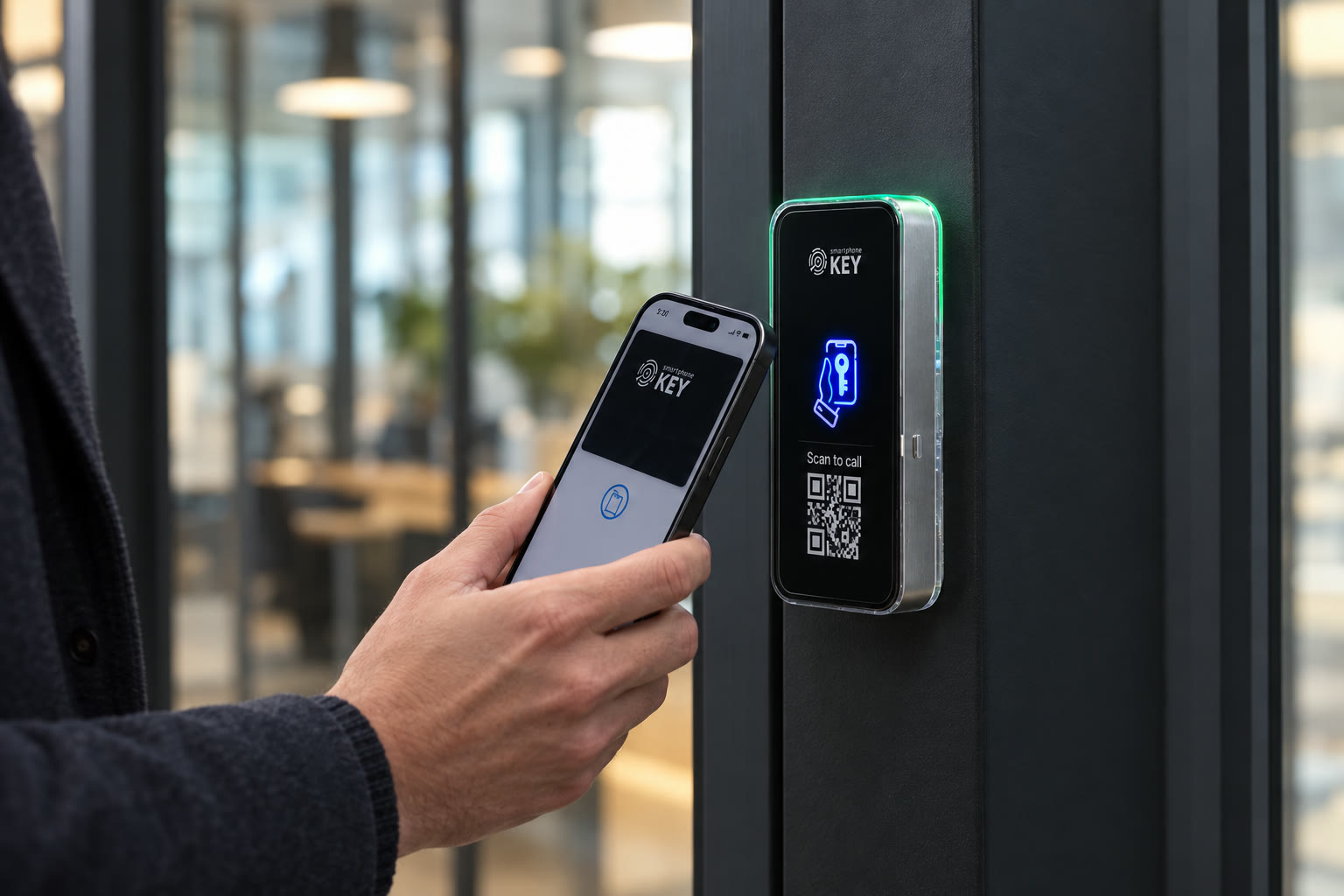
A credential reader and an electric lock have different jobs. SmartphoneKey recognizes the authorized key and uses a relay to control suitable locking hardware. An electric strike interacts with the door latch, while a magnetic lock uses a different physical arrangement. Choosing between them requires an assessment of the entrance, its existing hardware and how people must leave.
Example, not a completed project
An accepted credential cannot establish that a sticking door is fixed.
Suppose a demonstration credential is accepted, but the existing door sometimes needs to be pushed into alignment before its latch engages. The access result and the door condition are different observations. Report the closing problem and ask whether investigation or corrective work belongs in the proposal. A different reader cannot be assumed to repair the assembly, and a strike should not be selected from the symptom alone. This example distinguishes the questions to take to the assessor; it does not diagnose a customer's entrance or prescribe a field adjustment, lock type or electrical connection.
Assess the assembly before comparing components
Document the existing operation and the proposed result.
A useful hardware proposal explains why its arrangement belongs at this opening. Compare the physical findings and intended operating behaviour rather than choosing only by the visible reader or a strike's advertised size.
Describe what the assessor needs to investigate
- Identify how the present latch meets the frame and whether the door closes consistently. Show the handle and closer along with any existing release. Photographs may introduce these parts, but they cannot establish the condition of an unfamiliar assembly or determine the corrective work it needs.
- Locate the current release controls and explain their intended purpose. An entry panel, request button and credential reader may interact with other equipment. Ask which components the proposed installation will retain, without assuming that every existing control or concealed cable is compatible with the new arrangement.
- Explain the current way out and report any known operating concern to the responsible professional. A shared residential entrance and a private internal opening can present different requirements. This page does not select an exit arrangement or treat an included product component as approval of the assembled door.
Request the assessed hardware explanation
- Ask which release mechanism is proposed and how it relates to the existing latch and frame. If an electric strike and a magnetic lock are being compared, have the assessor explain their different arrangements for this property. A similar equipment price does not make the two choices physically interchangeable.
- Ask the installer to describe the selected power-loss behaviour and any required supply or control work. Keep the physical release condition separate from the ability to issue a new phone credential. Avoid interpreting one successful entry as evidence that every power, connection or equipment failure has been addressed.
- Agree what closing, release and exit operation will be explained within the accepted work scope. Identify retained mechanical access and any unresolved dependency. Keep the relevant property contacts involved in approving the proposed arrangement instead of treating the purchase of one component as authorization for every change to the entrance.
Questions for the assessor
Look beyond the front of the frame.
A neat reader installation cannot compensate for a door that does not close or a locking arrangement that has not been properly considered.
Identify what already moves
Describe the latch, handle and closer, plus any existing powered release. Show whether the door closes and latches consistently. An installer needs to understand the assembly rather than select a strike solely from an online photograph or the door material.
Trace the control path
The proposed arrangement must connect reader, relay, lock and power supply. Establish where equipment will sit and how wiring reaches it. SmartphoneKey documents low-voltage operation; that does not remove the need to assess the existing electrical provision and installation work.
Discuss loss of power
A magnetic lock releases without power. Electric strikes can have different power-loss behaviour depending on their type. The appropriate arrangement is a property-specific decision involving security and exit requirements, not a generic promise that the entrance always stays locked.
Define the acceptance check
Ask the responsible installer to explain normal release, door closing and the agreed exit method. Include any retained mechanical entry and backup arrangements. Product compatibility is not a statement that a particular entrance has received all required safety approvals.
SmartphoneKey materials explain a reader relay operating suitable electric locking equipment. The latch, frame and exit questions here identify matters for assessment; they are not strike-selection instructions, wiring directions or a finding that a particular assembly meets applicable requirements.


Review the complete door assembly
Let the opening determine the proposed release.
Show the latch, frame, handle, closer and any existing electric release to the responsible assessor. Report whether the door closes and latches consistently and how people currently leave. Establish the supply and control arrangement as part of the proposed installation. Power-loss behaviour and exit requirements need an entrance-specific decision; a component's product description cannot approve the assembled result. Ask the installer to identify any other responsible professional or approval needed for the particular property before accepting the hardware scope.
Is it the right fit?
Can the actual assembly be reviewed before selection?
The latch, frame and responsibilities are accessible
- The opening needs powered release controlled by an assessed reader.
- The owner can arrange a review of latch, frame and power.
- The work scope includes exit operation and the existing door condition.
A component-only promise would leave questions open
- You need a universal strike chosen without examining the frame.
- You want to infer building approval from a product feature list.
Questions about the mechanism behind the tap
Keep release, closing and leaving the building in view.
Credential recognition is one part of the entrance. Ask how the proposed hardware interacts with the actual latch and frame, and which operating conditions the installer will explain.
Does an electric strike replace the whole door?
Not necessarily. It is part of a locking arrangement associated with the frame and latch. Whether the existing assembly can be retained, altered or needs other work is a survey finding, not something established by this page.
Can we use a magnetic lock instead?
It may be an option to discuss, but it is a different arrangement with different power-loss and exit considerations. Ask the assessor to explain why a particular approach suits the opening rather than choosing only by equipment price.
What if the existing door sticks?
Report that during assessment. A powered release is not a general cure for a door that fails to close or align. Establish whether door adjustment or other work belongs in the scope before judging the access system.
Is an exit button the complete exit plan?
SmartphoneKey describes an included exit button. The actual means of leaving the property and any additional requirements still need to be confirmed for the installation. An included component alone does not prove suitability for every building.
Does an accepted phone credential prove the strike is the right choice?
It establishes a credential interaction in that demonstration, not the suitability of every part of the assembled entrance. The physical hardware still needs to match the assessed latch, frame, supply and operating requirements. Ask for the proposed arrangement and remaining questions to be explained before using a single successful tap as acceptance of the whole installation.
Can the existing release button identify what lock is fitted?
Its presence does not by itself establish the mechanism or its condition. Describe the control and show the installed equipment to the assessor. A button may be part of a wider entry arrangement, and this page does not diagnose that arrangement from a photograph. Confirm what will be retained and how it belongs in the proposed control path.
Should power-loss behaviour be chosen from a general security slogan?
No general slogan can determine the arrangement for an individual opening. Have the responsible installer explain the proposed release type, power-loss behaviour and entrance-specific exit requirements. Keep any approval or additional professional assessment explicit. The reader's ability to recognize a credential does not settle these physical and operational questions.
What should we bring to the locking-hardware discussion?
Provide clear views of both sides of the entrance, the latch and frame, known equipment details and a description of normal closing and exit operation. Identify the authorized property contact and any known fault. Do not send private entry codes. The purpose is to arrange an informed assessment, not to select a strike or direct wiring work from an online form.
Next step
Bring the frame into the conversation.
Include the latch, closer and existing release method when describing the job. Hardware selection follows the entrance assessment.
Request a door checkRequest an opening-specific locking scope
Name the assessed assembly, retained parts, proposed release and reader interface. Include supply and cabling work, any required door correction and the explained exit and power-loss arrangements. Keep separate approvals or unresolved conditions visible beside cost. The hardware line item should be part of a complete proposal for the entrance.
For the proposed Toronto/GTA review, arrange access to the latch side, frame and relevant equipment with the responsible contact. Describe operating hours and known closing faults so the survey can be coordinated. No strike model, approval or installation appointment is established by this demonstration enquiry.