
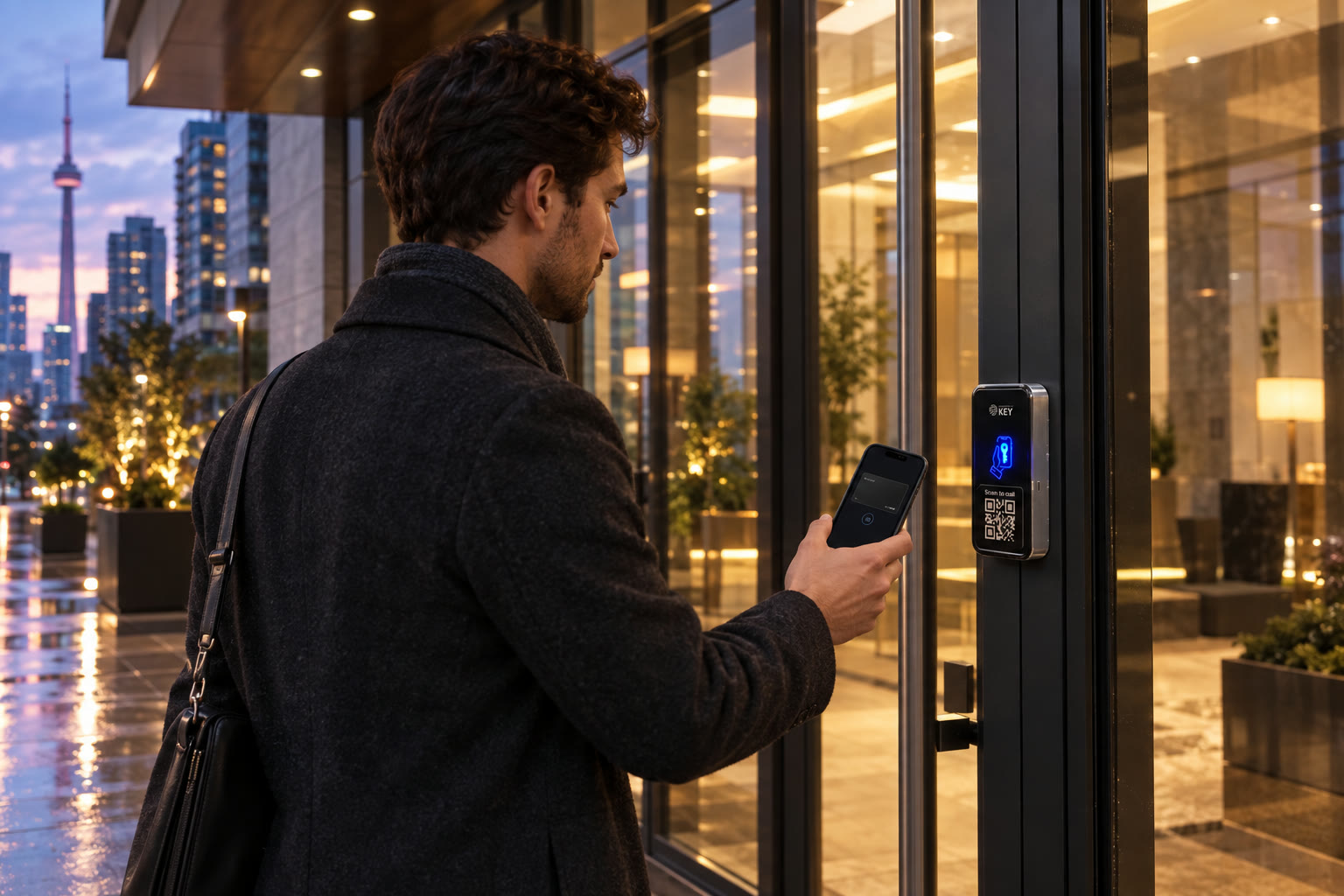
Building entry systems · Toronto & GTA
A shared entrance. Clear responsibility.
Residents, visitors and maintenance teams all depend on the lobby. Build an entry plan that management can maintain as households and staff change.
Common entrance review
Describe the building you manage.
Bring management, the present credential arrangement and the proposed door list into the first conversation.
Establish management authority
Identify common entrances and the approving property party.
Review resident administration
Discuss directory changes, visitor recipients and equipment boundaries.
Set the building transition
Include credential distribution, interruption and ongoing service charges.
In short
Where should a building entry project begin?
Start with management rather than an individual unit
Begin with the party responsible for the common doors and a list of the openings included. SmartphoneKey can manage people and doors by site, with phone or NFC-card credentials and QR visitor calls. The building decides who administers that arrangement, how occupancy changes are reported and which access each group actually needs.
Example, not a completed project
One lobby, three different changes to manage.
Consider an illustrative building with a resident moving out, a contractor returning for two mornings and a new household waiting for its arrival instructions. Management first confirms which openings each party needs. The outgoing credential is reviewed for withdrawal; the work visit is given its own approved limits; the new household receives the chosen credential and an explanation of where to present it. Someone must communicate those changes to the administrator. None of these events is established automatically by a lease document or a contractor calendar. If a lobby reader is being replaced at the same time, management also needs to explain the changeover and assistance route to the people already living there. This is a planning example, not a report of an installed customer project.
An opening day and a working routine
Plan the changeover and the months after it.
A reader demonstration answers only one part of a building project. The proposal should also explain how residents begin using the entrance and how management maintains permission afterward.
Before residents switch
- Write an opening list with everyday names, such as front lobby or service entrance. Record which release and credentials serve each opening now. This gives management and the assessor a common reference without assuming that the same equipment or permission belongs at every door.
- Ask what residents will experience during the proposed work: an interruption, a supervised changeover or continued use of retained equipment. Have the responsible installer explain the actual arrangement. Do not promise uninterrupted entry before the work and temporary access have been scoped.
- Include households that prefer a physical credential or cannot use the expected phone interaction. Confirm the supported card option and explain the visitor alternative. A resident communication should say where assistance is available, rather than leaving the household to infer a fallback from a product feature list.
- Choose a small handover exercise with an authorized resident, a limited visitor and the management contact. Agree what should happen before anyone starts testing. Keep the exercise separate from a blanket statement that all doors, devices and existing credentials have been accepted.
After the installation handover
- Keep an explicit route for occupancy changes to reach the access administrator. A departure reported to the leasing contact may still need a separate permission change. Agree who checks that the intended door access has been removed, without treating a returned card as the only possible credential.
- Review ongoing contractors by purpose and opening. A cleaner, lift technician and delivery visitor need different arrangements. Name the person approving each visit and how a changed work window is communicated; do not turn an occasional task into an unrestricted resident permission for convenience.
- Limit management roles to the responsibility each person actually holds. Discuss site grouping and local administration with the proposed configuration. When a staff member changes role or leaves, include that administrative access in the handover, alongside any credential used at the physical entrance.
- Keep the accepted equipment list, configuration contacts and operating instructions available to the next manager. Record who maintains the connection, how assistance is requested and which continuing charges were agreed. A useful handover should survive a personnel change without requiring residents to reconstruct the setup.
Think in responsibilities
A lobby is one part of the route home.
Separating common entrances, private spaces and service access helps avoid a credential that grants more than its holder needs.
01Map the common doors
List the lobby and any other proposed openings separately. Note existing powered locks, release controls and current credentials. A permission to enter the building does not automatically justify entry to every restricted room or private unit.
02Define the management roles
Name the person authorizing residents and the person maintaining their access. Decide how move-outs, lost cards and contractor changes reach that administrator. Local administration by site is documented, but the building still needs its own working notification process.
03Explain the resident experience
Consider a supported Wallet credential, a card and the visitor calling route from the perspective of different households. Include people who cannot use the expected phone interaction. Agree how residents receive instructions before changing a working common entrance.
The resident and management options here are based on SmartphoneKey product, installation and administration materials. The maintenance survey must establish the building-specific hardware; neither the illustration nor an existing fob establishes compatibility.


Bring the maintenance contact
Review the lobby as a working entrance.
Show how the present latch releases, how the door closes and how occupants leave. Identify the supply and the route to any existing reader, release button or visitor panel. Ask the assessor to explain which components can remain, what work affects finished surfaces and how entry will be maintained during that work. A proposed phone credential does not establish that the existing release, connection or exit arrangement is suitable.
Is it the right fit?
Is management ready to maintain the arrangement?
Responsibilities are assigned
- The responsible building manager can participate in the assessment.
- Occupancy changes can reach a named access administrator.
- Resident and contractor permissions can be distinguished.
Resolve the proposal first
- A single occupant wants to change shared hardware without approval.
- You need to assume compatibility with all existing building fobs.
Management decisions
Questions for the people responsible for the lobby.
Use these answers to separate hardware approval, resident communication and ongoing administration. Those responsibilities can belong to different parties even when they concern the same entrance.
Can several buildings be administered together?
SmartphoneKey describes grouping doors into sites and switching between them in its portal. Confirm the proposed site arrangement and local administrator responsibilities so one building's day-to-day changes do not become another manager's task.
How should a contractor receive access?
Define the approved opening and work period first. A time-limited guest permission may suit a visit, while ongoing service arrangements need their own access rules. Avoid issuing an unrestricted resident credential simply because it is convenient.
Who authorizes a common-door change?
That depends on the ownership and management arrangement. Involve the responsible building owner, manager or condominium decision-maker. A product recommendation is not permission to alter the common entrance.
Will entry work in a power outage?
The installed lock, power arrangement and exit requirements determine the response. Discuss backup power and actual fallback entry with the assessor. An NFC card does not by itself solve loss of power to the reader or lock.
What should management explain about privacy?
State which administrators can view activity and which people can manage cameras if those features are used. An access log is not a complete account of a resident's movements. Establish the building's own rules for using records before rollout.
Can residents keep their present cards during a changeover?
That is a question for the assessed equipment and proposed transition. List the current credential and reader arrangement, and ask which parts are to be retained, replaced or operated separately. SmartphoneKey NFC-card support does not establish that another system's cards will work. Management needs a specific answer before announcing that existing credentials will continue. Explain any new issue, withdrawal or assisted-entry arrangement to residents as part of the agreed changeover.
What should the management handover demonstrate?
Ask to see the agreed resident entry, visitor calling or limited-guest arrangement and permission withdrawal using the selected configuration. Include the administrator who will perform those tasks afterward. Record an exception or unavailable scenario so it can be resolved, rather than calling a successful reader tap acceptance of the whole building. Hardware operation, assistance and the way occupants leave still need their own appropriate checks at the installed entrance.
Do we need to send a resident list before discussing the entrance?
An initial scope can start with the proposed openings, approximate user numbers, current hardware and responsible management contact. Personal directories, individual entry codes and credential secrets are unnecessary in this preview form, which sends and stores nothing. If a later approved setup needs user information, management should agree the purpose, authorized administrator and handling route before providing it. The ability to import users is not a reason to collect their details at the first enquiry.
Next step
Scope the common entrance together.
Bring management, the present credential arrangement and the proposed door list into the first conversation.
Request a door checkAsk for a building-specific proposal
Separate retained door equipment, replacement releases, reader locations, power and cable work from credential setup and administrator handover. Include the proposed changeover, any finishing work and continuing connection or package charges so management can compare the complete scope.
For a Toronto or GTA building, confirm the location and who can provide access to the relevant service areas. Arrange the assessment around the responsible site contacts; no appointment date or installation duration is promised on this page.