
Understand the hardware choice · Toronto & GTA
A smarter entrance. Matched to your door.
Searching for a smart door lock can lead to very different products. Compare a replacement lock with a separate phone-access reader before deciding what should change at your Toronto home or managed property.
Compare the actual lock arrangement
What would have to change at this opening?
Describe the current lock and what you want daily entry to feel like. Confirm suitability and scope before changing the door.
Clarify the expected change
Explain whether you need a reader-based powered entrance.
Check installation dependencies
Review the frame, supply and existing locking mechanism.
Agree the operating setup
Include credential management, fallback arrangements and equipment costs.
In short
Where does SmartphoneKey fit among smart door locks?
Understand the distinction before buying
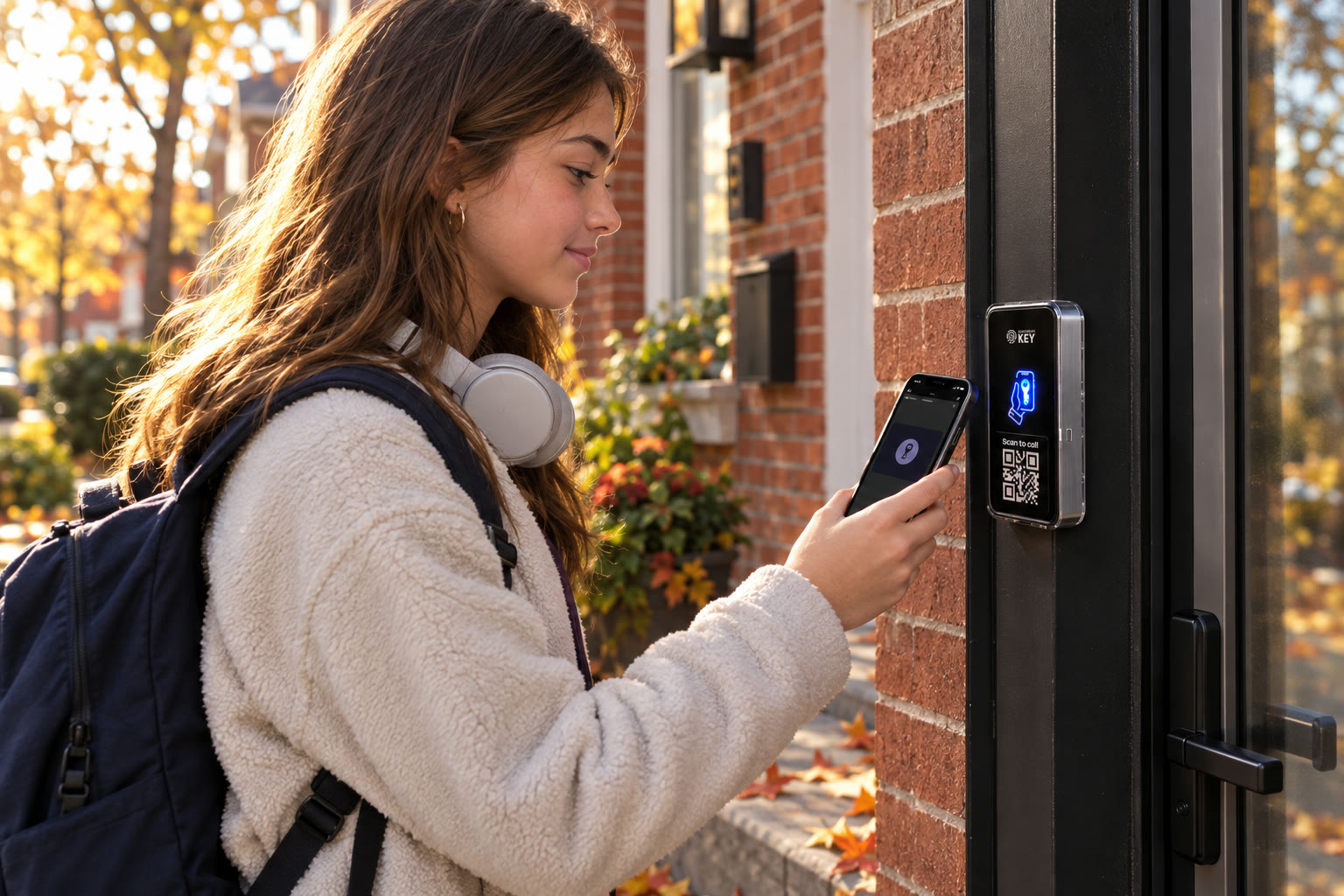
SmartphoneKey is a reader-based access arrangement. Its reader accepts documented digital credentials and switches an appropriate electric lock through a relay. That differs from replacing a residential deadbolt with a battery-powered consumer smart lock. Which approach suits your entrance depends on the existing hardware, permission to alter it, electrical supply and the people who need access.
Example, not a completed project
A replacement deadbolt and a shared reader solve different briefs.
Consider a homeowner comparing a battery-powered replacement lock with a manager planning several credential groups at a shared entrance. The homeowner must verify the chosen manufacturer's door preparation and functions. The shared entrance needs an assessed release, supply, reader connection and a person maintaining permissions. Neither comparison can be settled just by finding two products described as smart locks. Write down the required result and compare the whole installed scope against it. This hypothetical distinction is not a recommendation of a particular consumer model, a completed installation example or confirmation that the reader converts the homeowner's existing deadbolt.
Choose between two equipment arrangements
Follow the lock, power and management responsibilities.
The right comparison starts with what stays on the door and what supplies the release. Keep model-specific claims attached to their actual documentation instead of transferring them from one smart-lock category to another.
Questions about a replacement lock
- Identify the exact consumer model and the preparation it accepts. Its manufacturer defines which existing mechanism is replaced, the permitted installation arrangement and the supported entry methods. A broadly similar door photograph is insufficient to establish fit, and this site does not verify a consumer lock catalogue.
- Read that model's power and maintenance instructions rather than borrowing assumptions from a separate reader system. Establish who will maintain batteries or other required supplies and how the selected lock handles an unavailable credential. A model's advertised feature belongs to that product and configuration.
- List any app, keypad, biometric or smart-home function required for the purchase. Verify it against the particular lock's documentation. Search results can combine these technologies even when the SmartphoneKey proposal uses different credential and installation arrangements.
Questions about an installed access reader
- Ask the assessor to identify the electric locking hardware the reader would operate and whether existing parts can remain. The reader recognizing a phone is a separate function from the mechanism holding and releasing the door. Include the frame, available supply and wiring route in the proposed scope.
- Decide which people will receive supported Wallet credentials or NFC cards and who maintains their permissions. A household helper, continuing staff member and short visitor can need different limits. Do not treat the presence of a management portal as proof that someone has agreed to run it after installation.
- Compare installed work and continuing obligations together. Reader placement, lock conversion, supply, connection, credential setup and handover all affect the arrangement. Keep any unverified integration or fallback requirement explicit so a successful phone presentation does not conceal the unanswered purchase condition.
Ask before ordering
The entrance sets the boundaries.
Photos of the outside and inside of the door are a useful start. The assessment still needs to establish the working details that a product photograph cannot show.
What holds the opening closed?
Identify whether the door uses a mechanical latch, an existing electric strike or a magnetic lock. A slim wall reader does not remove the need for compatible locking hardware. Include a second leaf, an adjoining gate or an outer building entrance in the discussion if any of them affects the route inside.
Who can approve the change?
A homeowner may control their own entrance while a tenant or condominium resident may need someone else’s approval. Shared lobbies and fire-rated assemblies deserve particular attention from the responsible property professional. This page does not establish a compliance approval for an individual door.
How will keys be managed?
Decide who receives regular credentials and who needs a limited visit window. Consider family members, staff or cleaners separately instead of sharing one permanent credential. When circumstances change, the administrator needs a clear process for removing the old permission.
What happens after the first successful entry?
A complete handover includes adding a user, withdrawing a credential and explaining the actual fallback arrangement. Confirm which package and connection are being supplied, along with any continuing costs. Do not judge the installation only by whether one demonstration phone opens the door.
SmartphoneKey documentation establishes a credential reader controlling suitable electric locking hardware. The consumer-lock comparison on this page explains purchase questions; it does not certify another manufacturer's model, a retrofit kit or an individual door assembly.


Assess the opening rather than the product photograph
Bring both sides of the door into the comparison.
Show the assessor the existing latch or release, handle arrangement, frame and any equipment already controlling entry. Identify a shared outer opening if the route includes one. Explain whether the purchase is meant to replace a particular consumer lock or add managed phone access through a reader. These are different scopes. The assessment must establish the physical arrangement and the responsible approvals before a feature list can become a proposal. A neat device illustration does not confirm dimensions, compatibility, safe exit or permission to alter the assembly.
Is it the right fit?
Does the proposed arrangement match the purchase brief?
The hardware distinction is understood
- You want an assessed phone-access arrangement rather than choosing solely by appearance.
- Several people or time-limited visitors need distinct permissions.
- You can confirm the door’s ownership, hardware and powered-installation scope.
Check the required model or feature
- You need a particular consumer-lock brand or a feature this product has not documented.
- You expect a reader to fit every deadbolt, sliding door or patio assembly without investigation.
Questions hidden by the phrase smart lock
Compare the hardware, the credential and the ongoing job.
Define the entrance you want to change and the feature you actually need. Similar search labels do not make a replacement deadbolt and an installed reader system interchangeable.
Can a phone reader simply replace my current deadbolt?
Not as a universal like-for-like swap. The reader needs an appropriate electric locking arrangement to control. Establish whether the existing door can support that arrangement and what work would be required before deciding to replace hardware.
Do smart lock searches prove that fingerprint entry is included?
No. Search results combine many manufacturers and technologies. SmartphoneKey’s documented credential options do not establish that a keypad, fingerprint sensor or another brand’s app is part of the proposed installation. Confirm the exact equipment and functions in the scope.
Is this only useful for a private home?
A reader-and-permissions approach can also be considered for managed buildings and workplaces. Each setting introduces different decision-makers and access rules. The number of people, connected doors and administration responsibilities should guide the comparison.
Should I keep a mechanical way into the property?
Discuss an actual fallback with the assessor. Its form depends on the installed lock and the property’s arrangements. A spare NFC card is a credential option, but it is not proof that all power, network or hardware failures are covered.
Can I compare SmartphoneKey using only a replacement-lock price?
That compares unlike scopes unless the door work is also understood. A reader installation may involve a suitable electric release, supply, cabling and connection in addition to the visible device. Ask what the proposed arrangement retains and adds. Compare the complete installed result and continuing charges rather than assuming a consumer lock's shelf price includes equivalent work.
Does a slim reader mean that the door needs no alteration?
Its appearance does not establish the work required behind it. The assessor must identify the release, available electrical provision, frame and intended control path. Some existing equipment may be retained if suitable; this page does not confirm that outcome for your entrance. A required door conversion should be visible in the proposal before equipment is accepted.
What if the outside door and apartment door have different owners?
Treat them as separate openings in the brief. Explain the route you want to use and involve whoever can approve work at each assembly. Permission to change a private inner lock does not establish control of a common entrance. The scope should say which opening is being assessed and which systems remain outside the proposed work.
Can a particular smart-home feature be assumed from the search term?
No. Name the exact function and equipment on which the purchase depends, then request confirmation for that configuration. A feature documented for another manufacturer's lock is not evidence that SmartphoneKey provides it. Keep an unverified integration unresolved rather than treating the common phrase smart lock as a compatibility statement.
Next step
Choose the arrangement before the device.
Describe the current lock and what you want daily entry to feel like. Confirm suitability and scope before changing the door.
Request a door checkAsk for the chosen door arrangement in writing
The comparison should name the retained mechanism, proposed electric hardware, reader, power and connection work. Include credential management, handover and any continuing package costs. If a particular consumer lock or integration is required, keep that requirement distinct from the reader proposal until its suitability has been established.
For a Toronto/GTA property discussion, arrange a contact able to show the opening and clarify its ownership. Bring the exact existing model if known, without sending private codes or account access. Assessment precedes any equipment commitment or agreed installation appointment.