
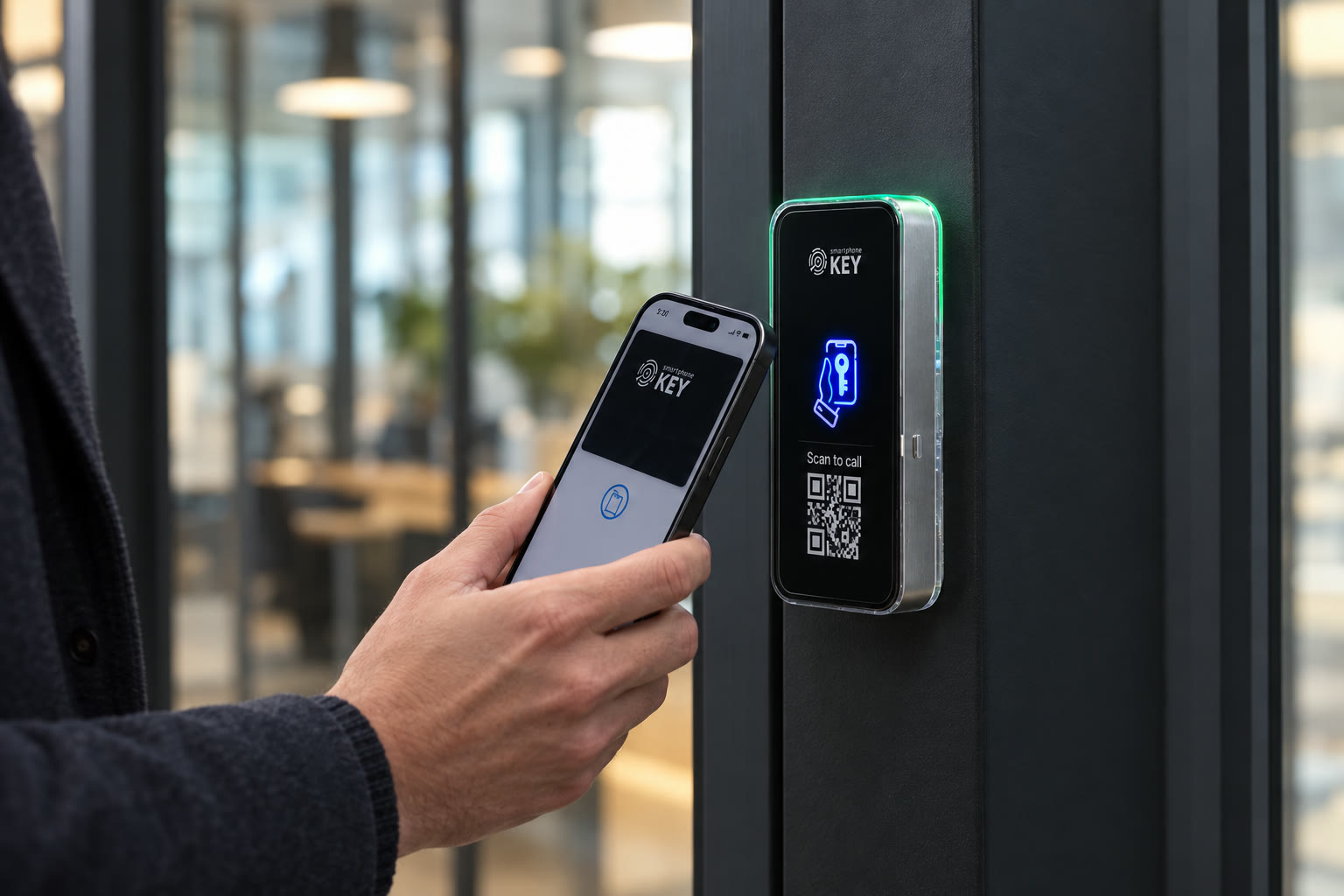
Review your credentials · Toronto & GTA
Fewer shared keys. A clearer access list.
If you are comparing a key fob system with phone access, focus on issuing and withdrawing credentials. A different shape of key is useful only when someone can reliably manage who holds it.
Review issuing, loss and withdrawal
Who is responsible for each continuing credential?
List regular users, temporary visitors and who can withdraw permission. Use that list to compare credentials and administration.
Review credential ownership
Identify existing cards, readers and lost-key procedures.
Assess the migration boundary
Confirm which equipment and credentials are actually compatible.
Agree continuing administration
Include card replacement, withdrawal and the selected package.
In short
Are NFC cards interchangeable with existing fobs?
Check the credential technology before assuming reuse
No interchangeability is established merely because both are presented near a reader. SmartphoneKey documents its own NFC cards alongside Wallet credentials. An existing key fob system may use a different technology or administration process. Review the actual credentials and reader before promising that old tokens can be enrolled in a new arrangement.
Example, not a completed project
A replacement card is issued after the old one is reported missing.
Imagine a regular user reporting a lost physical credential and asking for another. The property must decide who receives the report, how the replacement is authorized and what happens to the earlier permission. Supplying a new object does not demonstrate that the lost credential's access has been withdrawn. Practise the intended administrative steps with an approved example at handover. This is an illustrative loss-response process, not a customer incident, proof that a missing card has been detected automatically or a promise that a physical card covers every outage affecting the entrance.
Compare permission management as well as token formats
Follow the issuing decision through to withdrawal.
A smaller object or a phone pass does not establish a maintained access list. Ask how the proposed credential arrangement supports the property's real changes without assuming that a new reader knows when circumstances change.
Establish what is being issued
- Identify the documented credential technology and the reader arrangement proposed for the opening. Existing fobs can belong to another system even when they are presented in a similar way. Keep any required reuse of old tokens unresolved until that particular relationship has been assessed and confirmed.
- Decide which doors a regular holder should reach and who approves the entitlement. A shared key previously covering several rooms is not evidence that every replacement user needs the same reach. Consider the actual role or occupancy instead of copying a broad permission simply because it is familiar.
- Explain the supported physical-card option to a person who prefers it over a phone credential. Agree issuing and replacement responsibility. A personal device preference should be handled as a credential-planning question rather than an automatic reason to borrow another person's unrestricted access.
Maintain what happens afterward
- Give users a clear route to report a lost credential and identify the person who reviews the old permission. Agree who authorizes a replacement and who performs the change. The availability of a revocation function does not establish that a report has arrived or that the administrator has acted on it.
- Handle the end of a role, stay or tenancy as an access decision that must reach the responsible person. Recovering a physical object can be part of the property's process, while withdrawal still needs to be understood. The supplied documentation does not establish automatic updates from staff or property-management software.
- Use credential activity records with their actual meaning. A logged interaction does not independently identify a borrower or show everything somebody did after arrival. Keep issuing responsibilities, approved door groups, continuing costs and operator instructions available to the next administrator.
Manage the credential lifecycle
Issue it deliberately. Remove it promptly.
The useful comparison is what happens over months of staff changes, lost items and temporary visitors, rather than the first demonstration tap.
Keep a named access owner
Assign responsibility for deciding who receives entry and which doors they may use. A credential without an accountable owner becomes difficult to withdraw when circumstances change. Give administrators a reliable way to hear about departures and lost cards.
Offer an appropriate physical alternative
A person may prefer an NFC card to a phone credential. Plan how cards are issued, recorded and returned. Do not treat reluctance to use a personal phone as a reason to share another person's permanent key.
Handle loss as a permission change
SmartphoneKey supports removal of access in its portal. Establish who performs that action when a card is reported missing and how a replacement is authorized. Replacing the object without withdrawing its old permission leaves the administrative problem unresolved.
Separate borrowing from guest access
Temporary visitors may need a start and end window instead of a staff credential borrowed for the day. Decide which authorized doors and visit period apply. A guest key should reflect the actual visit, with a clear process for cancellation.
The supplied guides document SmartphoneKey NFC cards, Wallet credentials and portal administration. The issuing and loss examples below are operating processes for the property to agree, not a fob-cloning offer, an identity-verification service or proof that another system's tokens can be reused.


Identify the current token and its administration
Review the reader system before promising reuse.
Describe the existing reader, release and issuing process with the responsible property contact. If equipment details are available, bring them to the assessment without disclosing private credential data in this form. SmartphoneKey materials describe product-specific NFC cards and Wallet credentials; similarity to an existing fob does not prove interchangeability. Establish the proposed credential choices, the retained hardware and the people maintaining permission changes before planning an enrollment or changeover.
Is it the right fit?
Can the property maintain ownership of issued permissions?
Issuing and withdrawal have accountable owners
- You want separate credentials for people with different access needs.
- The access list can be maintained when users leave.
- You need a documented card option alongside compatible phone keys.
A token-reuse or operating assumption needs checking
- You require an unconfirmed cloning service for another system's fobs.
- You expect every existing token technology to work with one reader.
Questions after the first credential is issued
Make changes manageable across the credential's whole use.
Compare how a person receives permission, reports a lost item and stops needing access. The token and its authorization are related parts of a process somebody must maintain.
Can a lost card be made unusable?
The documented portal can remove its access. Someone responsible must receive the report and make the change. This is not a promise that the system identifies a lost card before anyone reports it.
Is one card per department enough?
A shared credential makes it harder to distinguish authorized users and withdraw one person's permission. Work out whether individual credentials better match the property's operating needs instead of sharing by default.
Can the access record identify the person holding a borrowed key?
A record concerns the credential interaction. It does not independently prove who held a borrowed card or why they entered. Use clear issuing rules rather than treating an activity record as a complete identity check.
Do cardholders also need to use a phone?
The supplied product information describes NFC cards as a credential option. Confirm the proposed issuing and administration process, including any package conditions, rather than assuming everyone needs the same day-to-day method.
What about a phone with no battery?
Do not promise entry with an unpowered phone. A planned card may be another credential, but it is not a complete solution to every power or hardware failure. Agree the entrance-specific fallback during assessment.
Does issuing a replacement card disable the earlier one?
Do not assume that one action establishes the other. Agree how the reported loss reaches the administrator and how the previous permission is handled in the proposed configuration. Practise the intended procedure at handover. This page creates no card and does not establish that a lost object is automatically detected or its authorization removed without a responsible person acting.
Can a department's shared fob become several individual credentials?
Describe the people and doors involved so their actual permission needs can be reviewed. Individual credentials should follow an approved access plan, not an assumption that every former borrower needs every old entitlement. Confirm the supported issuing arrangements and administration scope without treating the old fob's physical form as evidence of compatibility with the proposed reader.
What can we bring without sharing private token information?
Provide the reader or system model if known, the approximate continuing user group, the proposed opening list and an explanation of issuing and loss reporting. Personal fob identifiers, copied data and passwords are unnecessary for this preview. The first discussion should establish equipment and operating boundaries before detailed enrollment or any credential change is agreed.
Next step
Start with the people holding today's keys.
List regular users, temporary visitors and who can withdraw permission. Use that list to compare credentials and administration.
Request a door checkRequest the credential and administration scope together
Name the proposed supported credentials, assessed reader and release arrangement, retained equipment and any conversion work. Include issuing, loss reporting, withdrawal training and continuing charges. Keep unverified existing-token reuse separate from documented product-specific card options so the comparison remains clear.
For the Toronto/GTA review, nominate the contact who understands today's keys and can arrange an authorized equipment assessment. Bring model information where available, without private credential records. This local form books no enrollment session and performs no cloning, invitation or revocation.