
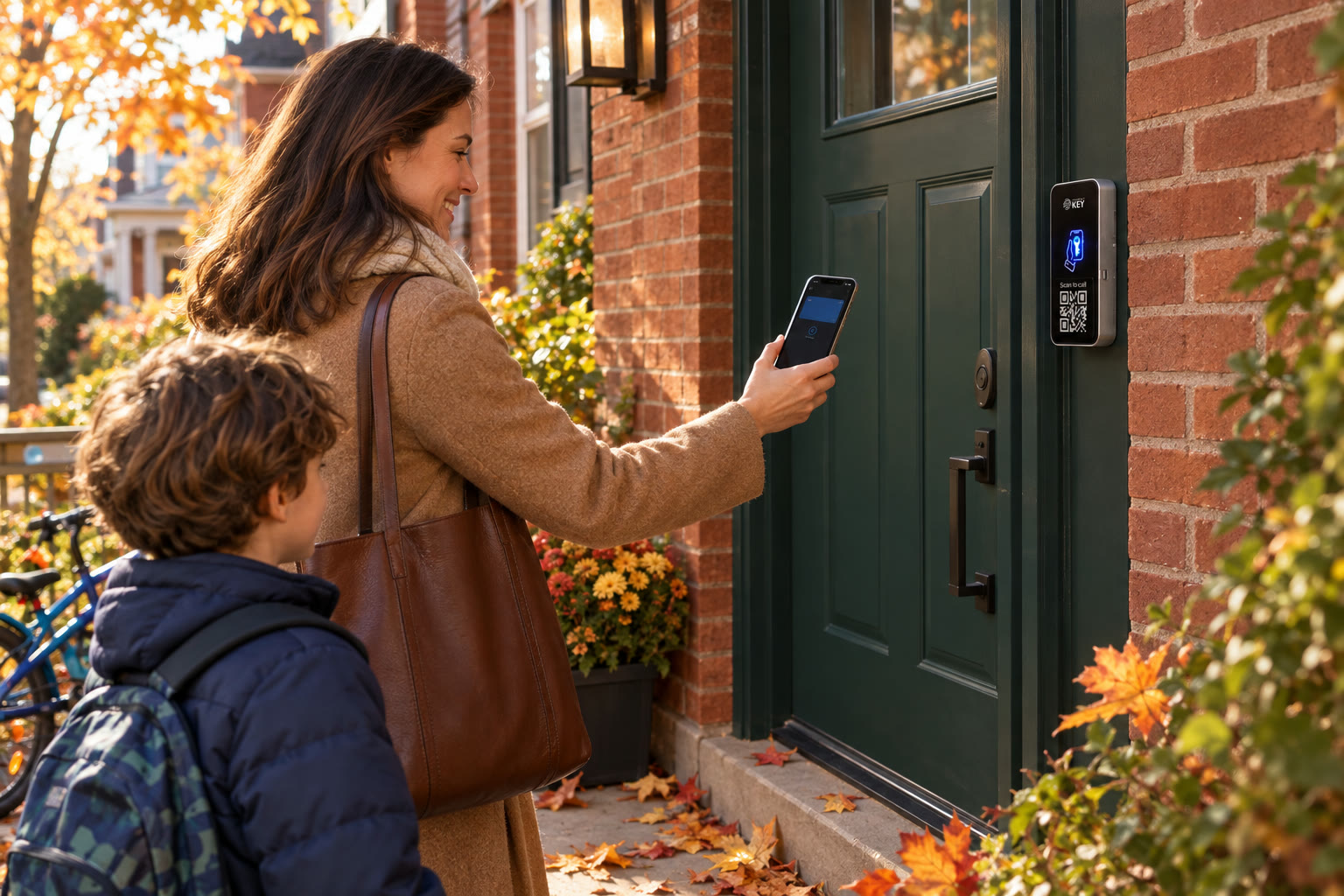
Home keyless entry · Toronto & GTA
Family routines. Guest permissions.
Plan the front door for the people who live there and the visitors they invite. Phone access should fit those routines and the physical entrance you already have.
In short
Is a phone reader the same as a replacement home lock?
Understand what will change at your entrance
They are different parts of an entry arrangement. SmartphoneKey uses a reader that recognizes documented phone or NFC-card credentials and controls suitable electric locking hardware. A conventional deadbolt is not automatically compatible. The assessment should establish the required door work before the household commits to a particular way of entering.
Prepare the household entrance review
Explain the home routine you want to change.
Start with household members, occasional helpers and the current lock. Confirm the physical scope before changing your everyday entry routine.
Choose the household administrator
Describe who lives here and the temporary visitors.
Check the physical prerequisites
Review door suitability, the supply and credential alternatives.
Agree a manageable routine
Include guest changes and the complete installed cost.
Example, not a completed project
A family member returning and a helper visiting.
Imagine a household choosing an entry arrangement for someone who returns every day and a helper expected for a particular visit. The regular user needs a supported credential and clear instructions for the actual reader. The helper needs an authorized purpose and an appropriate period, with a household contact able to handle a changed visit. Those permissions need not be identical merely because both people use the front entrance. If the home is reached through a communal lobby, the household must also understand who controls that earlier opening. Describe both routes to the assessor without assuming one installation covers them. This is an example for planning; it is not a customer story or evidence that an existing apartment or house lock is compatible.
Two parts of a home decision
Assess the opening and agree the household responsibilities.
The equipment proposal should explain the physical change. The handover should explain what people do afterward. Keep those questions together without expecting one reader demonstration to answer both.
Understand the entrance work
- Point out the opening the household actually uses and ask which present components remain. A reader, a credential and a powered release serve different jobs. The proposal should identify the installed arrangement rather than describe every smart lock found in a product search as an equivalent replacement.
- Discuss the supply and wiring route with the assessor, including any effect on finished walls or the frame. Ask who approves work on shared or rented property. Do not treat a discreet reader photograph as evidence that the conversion involves no cabling or alterations.
- Explain how occupants normally leave and how they would get assistance if the intended entry method were unavailable. The response depends on the selected hardware and arrangement. Neither carrying an NFC card nor choosing a phone credential supplies electrical power to the installed equipment.
- Name a particular smart-home requirement if it matters to the household. Ask for the proposed connection and devices to be verified together. The product's documented Matter support does not establish compatibility with every existing hub, camera or accessory already present at home.
Maintain the people and permissions
- Discuss each regular user's supported credential and whether anyone prefers the product-specific card. Explain where it is presented and who can help. The household should understand its agreed alternative rather than rely on somebody else's borrowed permanent key when an ordinary arrival goes wrong.
- Give an occasional helper the permission agreed for the visit, not automatically the same reach as a resident. Establish who issues it and how the household handles an earlier arrival, a changed appointment or a cancellation. A permitted time window does not decide those arrangements by itself.
- Include a missing or replaced phone and an ended helper arrangement in the administration discussion. Identify the responsible person and the supported steps for changing permission. Do not assume that a change made to a separate household account automatically updates the door credential.
- Keep the accepted equipment scope, assistance contact, administration instructions and continuing charges with the household handover. Another family member should be able to understand what was agreed without reconstructing the setup from a demonstration video or relying on the installer's personal credential.
Start with household life
Not every visitor should hold a household key.
A family member coming home regularly has a different need from a sitter, dog walker or contractor making a limited visit.
People who live at home
Discuss supported phone credentials and whether anyone would prefer a card. Make sure each person understands the reader interaction and the agreed fallback. The household should not depend on a promise of entry with a flat phone.
People invited for a purpose
Describe the reason and period for a visit before granting access. A guest window can end without collecting a borrowed metal key. Someone in the household still needs to issue that permission and handle a visit that moves or is cancelled.
People doing work on the property
Decide which authorized entrance they need and whether someone should be present. A digital credential is not a decision about supervision or access to every room. Keep the permissions appropriate to the planned work.
The entrance itself
Show the assessor the lock, frame, available power and expected cable route. A semi-detached house, apartment unit and shared building lobby can present different ownership and hardware questions. A product photograph cannot settle those details.
SmartphoneKey descriptions support the distinction between a credential, reader and suitable electric release. The household examples organize the questions for an assessed proposal; they are not a universal conversion method, a smart-home compatibility list or a promise about an unseen door.


The current opening matters
Show how the home door works before discussing a phone key.
Identify the present latch or lock, the frame and any existing powered release. Ask the assessor to explain the physical work, suitable supply and cable route rather than assume the reader replaces a conventional deadbolt. Discuss the surfaces affected and the way occupants leave and obtain assistance. Include any shared entrance on the route, while keeping its approval and equipment separate. A product photograph or a supported phone credential cannot establish that this particular household door can be converted as imagined.
Is it the right fit?
Does the household understand both parts of the change?
The entrance and operating roles can be agreed
- You can authorize changes or obtain the responsible owner's approval.
- Regular household access and short visits should be distinguished.
- You want the actual door assessed before choosing equipment.
Resolve the property or compatibility question
- You require a universal drop-in replacement for any deadbolt.
- You expect a tenant to alter shared building hardware without consent.
Questions before changing everyday entry
Make the new routine understandable to the whole household.
A convenient credential still needs a workable entrance and someone maintaining permission. Consider the regular return home, an occasional helper and the situation in which the expected phone is unavailable.
Can a tenant arrange phone access?
Begin with the landlord or responsible property manager. A rented private door and a shared building entrance can have different permission requirements. Discuss the proposed changes before authorizing work.
Can we give a dog walker access only for agreed visits?
The documented guest options support a defined time window and optional use limits. Agree which door is appropriate and who changes permission when plans change. Do not share a permanent household credential merely for convenience.
Does this include a fingerprint sensor or keypad?
Those features are not established by the supplied SmartphoneKey information. Search terms for home smart locks cover many different products; verify the proposed equipment rather than adopting another manufacturer's feature list.
What should we do during a power failure?
Have the installer explain how the particular lock and power arrangement behaves and how authorized entry and safe exit are maintained. The appropriate fallback is a property decision, not a universal claim that a phone key handles every outage.
How do we compare the full household cost?
Include any lock conversion, reader, power, wiring, connection and ongoing package requirements. Ask for the complete assessed arrangement before judging it against the price of an unrelated replacement deadbolt.
What should we review when a household phone is replaced?
Ask for the supported credential-management steps and the person responsible for performing them as part of handover. The household needs to know how the intended replacement user receives access and how unnecessary earlier permission is handled. Do not infer automatic transfer or revocation from changing a phone, Wallet setting or unrelated account. Confirm the procedure for the proposed setup instead of relying on an example from another manufacturer's lock.
Does a household key need to cover a shared building entrance?
That depends on the ownership, equipment and permissions for the actual route. A private home-door proposal does not establish access to a landlord-controlled lobby or compatibility with the building's existing credentials. Identify the responsible party for each opening and ask what is within the approved scope. A person living in a unit may need to coordinate a common-entrance question with management rather than make that change as part of private-door work.
What should the home handover include beyond one successful tap?
Have the intended user follow the actual arrival instructions and ask the responsible household person to explain credential changes, a limited visitor and the agreed assistance route. Include the accepted equipment, connection, ongoing charges and any question that was not resolved. A successful demonstration by one phone does not establish every device, smart-home connection or outage scenario. Keep those limits clear so the household knows what it can rely on.
Next step
Describe the people arriving at your door.
Start with household members, occasional helpers and the current lock. Confirm the physical scope before changing your everyday entry routine.
Request a door checkCompare the installed household arrangement
List retained and new door equipment, the proposed supply and cable work, credential setup and administration handover. Include connection requirements and continuing charges. If a particular device or smart-home relationship remains unverified, state it separately so the household can assess the actual proposal rather than assume every advertised technology is included.
For a Toronto or GTA assessment, arrange the contact able to explain and approve the relevant opening. Discuss access to the work areas and the everyday route the household depends on. Timing and any temporary entry arrangement follow the assessed scope; this preview does not reserve an appointment or promise an immediate conversion.